A Chef’s Guide to an Organized Kitchen Pantry
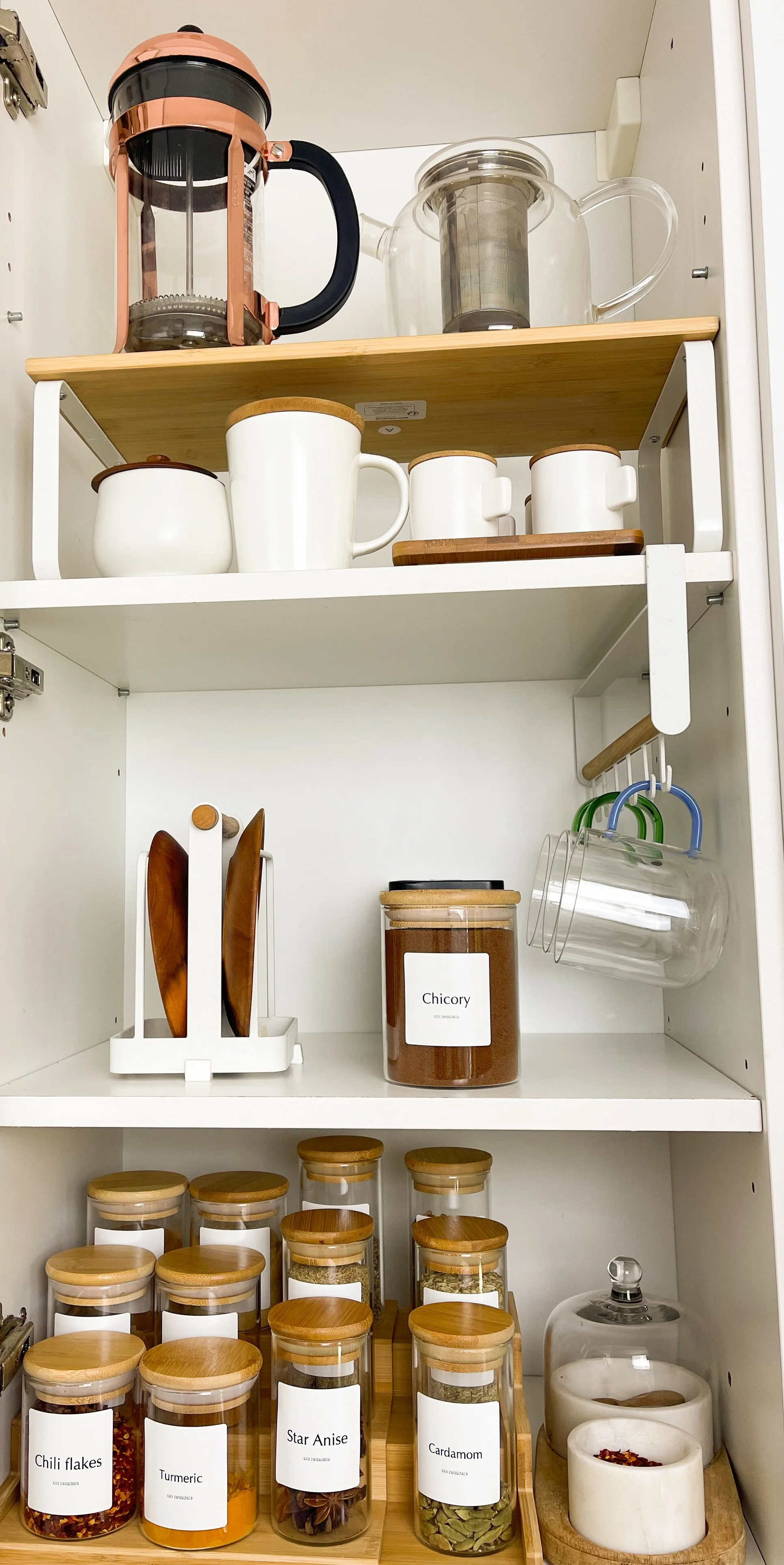
A Low Tox Scandinavian inspired Kitchen Pantry
As a professional chef, I’ve spent long hours in high-pressure kitchens, where order is survival. For a long while, I’ve been dreaming of a minimalist, slick and beautifully labeled kitchen pantry. Now that my kids are a bit older, I’ve finally carved some time out for a complete revamp. Look at this blissful order! And this is just the beginning.
For me, the motto "messy kitchen, messy mind" goes deep. It’s my German side coming out—having lived in Germany for several years, the uncompromising standard for functional design stuck with me.
Trying to innovate a new recipe in a chaotic kitchen is like trying to have a serious phone call while your toddler is crying in the same room. Here’s how I built my kitchen sanctuary, starting with the basics.
Rule 1: Bye plastic, Hello Glass!
Plastic is the "fast fashion" of the kitchen. Not only is it prone to leaching harmful chemicals like BPA and Phenols into your food, but it absorbs odors and degrades over time. In professional kitchens we strictly differentiated containers for the pastry section; you certainly don’t want your high-quality chocolate stored in a container that still smells faintly of last week’s garlic.
The Chef’s Secret: Ingredients simply stay fresher in glass. Nuts, in particular, go rancid quickly when placed in plastic containers. Think of glass as an upfront investment in your health. You can build your pantry slowly by upcycling high-quality jars, as I’ve been doing for years.
Rule 2: No label, No Peace of Mind
As an anti inflammatory chef, I play with a lot of “strange” new ingredients and spices. When I’m in a rush, t’s far too easy to mistake Ajwain seeds for fennel. Is that white powder cornstarch, potato starch, or pea protein?
I’ve learned the hard way that Spirulina and Chlorella may look the same, but they certainly don't taste the same when you swap them by mistake. No label, no peace of mind.
Rule 3: Mind the Light
Spices and superfoods are living ingredients; sunlight is their enemy. Too much UV exposure kills the potency of your spices and oxidizes the nutrients in your superfoods (like Acai and Chlorella).
The Rule: If it’s in a clear glass jar, it belongs behind a closed cabinet door. If you want it on a shelf, use amber glass or ceramic to keep the light out.
My Pantry Organization Must Haves
I opted for a Scandinavian minimalist style—clean, stacked, and toxin-free. To maximize vertical space without spending a fortune, you can use a mix of recycled jars and a few key "vetted" tools:
Glass Jars with Bamboo Lids: Airtight, stackable and beautiful. They come in all sizes to fit any shelf: Extra Small, Small, Medium-Large
Cabinet Shelf Racks: To double your storage height instantly.
Under-Shelf Mug Hangers: I found these during a trip to Stockholm in this beautiful shop. They slide easily onto any rack to reclaim wasted space.
Extensible Spice Steps: To provide clear visibility so you don’t accidentally grab cinnamon instead of coriander.
Labeler: Managed via an app and incredibly satisfying to use.
Budget Tip: A white water-based paint marker does the trick for the cost of a coffee.
French press: to upgrade your morning ritual with a bullet proof coffee.
This is just the beginning of the revamp. Check my Stocking Your Pantry section for my downloadable Favourite Pantry Staple List and my preferred sourcing guides. May your pantry always be organized and your chocolate never smell like garlic. So happy to have you in this space.
Heads Up, at The Lemon Way, we only share essential recommendations. This post contains affiliate links. As an Amazon Associate, I earn from qualifying purchases meaning if you make a purchase, I may receive a small commission at no extra cost to you.
Recent Posts